
2025 Book Award Finalists
The Dr. Tony Ryan Book Award has narrowed the thoroughbred literary competition to three finalists, all of whom produced fine examples of excellence in long-form writing about the thoroughbred sport. These nonfiction titles were chosen on their individual merits, but as a group they present the reader with a broad range of thoroughbred racing history. You could read them chronologically, starting with a profile of an influential 1800s Kentucky breeder who imported foundation bloodstock from across the Atlantic in the 1800s, continuing to a collection of essays of America’s racetracks, past and present; and finishing with a complex and compelling investigation of the state of racing today, with a forward-looking view focused on the horse.
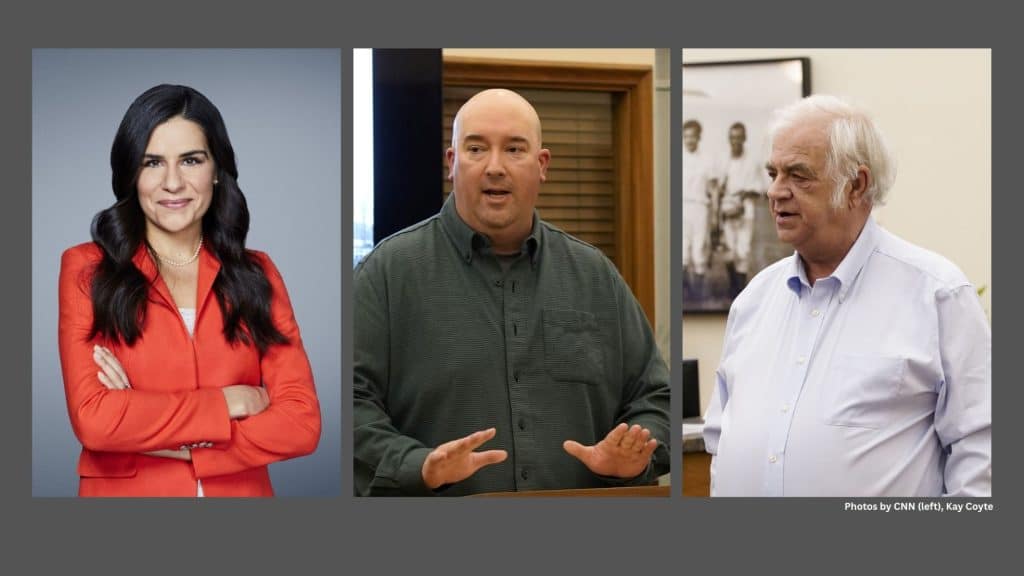
“Reinventing the American Thoroughbred: The Arabian Adventures of Alexander Keene Richards,” by Gary A. O’Dell, is a rare biography of a pre-Civil War thoroughbred breeder, researched and written by Gary O’Dell, a Morehead State University professor emeritus whose interest in Richards’ Blue Grass Park farm was stirred after researching an earlier history of Georgetown, Ky. In O’Dell’s pages, Richards’ experiment to breed a better thoroughbred by infusing the Arabian’s stamina becomes a travelogue of his trips to Europe, Syria and Egypt in search of fine Arabian blood, while also offering a front-row seat to America’s fledgling bloodstock industry at the time of the Civil War. “The Racetracks of America: From the Pre-Civil War Days to the 21st Century” is a comprehensive coffee table book with essays by 35 seasoned turf writers, edited by Brien Bouyea, and thousands of photos and memorabilia that will entertain readers and serve as a valuable reference for racing fans for years to come. “Death of a Racehorse: An American Story” is CNN reporter Katie Bo Lillis’ tough-love letter to the thoroughbred sport that she grew up in, riding with her family and working in the Virginia racing industry. Like her mother, Lillis has a reporter’s nose for a good story and she went behind the scenes of recent racing scandals, following leads to barns, drug labs, law enforcement offices and racetrack boardrooms. In concise prose, she told the unflinching story, ending on a hopeful note.
Other semifinalists were “Pryor Knowledge: Horse Racing, Love, and Slavery in the Antebellum South,” by M.B. Gibson; “When Montana Outraced the East: The Reign of Western Thoroughbreds 1886-1900,” by Catharine Melin-Moser; and “Racing’s Return From the Brink: The Incredible Comeback of Old Rosebud and American Horse Racing,” by James C. Nicholson. “The Greatest Racehorse? Man o’ War and the Judgment of History,” by Mark Shrager, received an honorable mention.
With a $10,000 winner’s prize and Tipperary crystal trophy, the Book Award is one of the most lucrative in all of publishing. It was launched in 2006 by the late businessman and philanthropist Tony Ryan, a voracious reader who wanted to encourage publication of books on any aspect of the thoroughbred racing industry. The first year, Ryan’s Castleton Lyons farm and Thoroughbred Times co-sponsored the award. After Ryan’s passing a year later, his son Shane Ryan carried on, while changing the name of the award to honor his late father.
Castleton Lyons will host a reception for the three finalists on Wednesday, Nov. 4, at the Ryan family’s farm in Lexington, Ky. Mark Simon, former editor/publisher of Thoroughbred Times, will open the proceedings and Caton Bredar, longtime on-air reporter, host and handicapper with TVG/FanDuel, will introduce the authors.
The 2025 judging team, all of whom have earned media Eclipse Awards, included Bredar, along with Josh Pons, winner of the 2024 Dr. Tony Ryan Book Award for “Letters From Country Life: Adolphe Pons, Man o’ War, and the Founding of Maryland’s Oldest Thoroughbred Farm”; Kay Coyte, a former editor at The Washington Post and The Horsemen’s Journal; and former Lexington Herald Leader turf writer and historian/author Maryjean Wall.
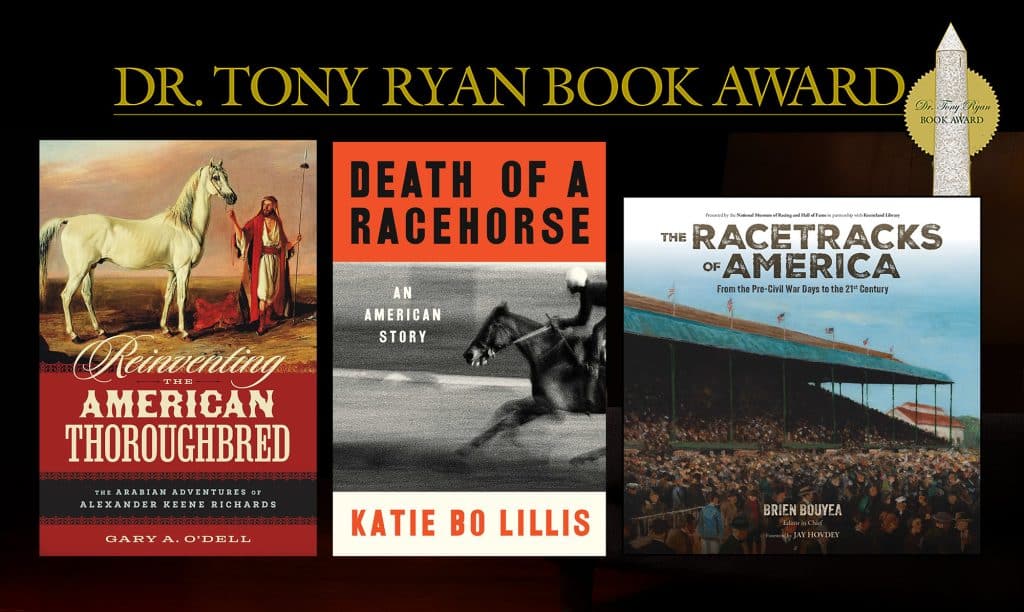
Following is a synopsis of the finalists published during the 2025 calendar year, listed alphabetically by author.
“The Racetracks of America: From the Pre-Civil War Days to the 21st Century,” edited by Brien Bouyea
Published by the National Museum of Racing and Hall of Fame in partnership with Keeneland Library, this beautifully illustrated coffee table book includes more than 70 essays from 35 journalists and authors covering historical and ongoing tracks, some grouped by racing circuit, from coast to coast, south Florida to Seattle, bull rings to Belmont. The book is also extensively illustrated, with upwards of 600 photos, paintings, programs, officials’ badges and memorabilia. Author and historian Brien Bouyea, the National Museum of Racing and Hall of Fame’s communications director, had the formidable job of editing the 440-page tome, creative director Chris Mangini pored through more than 2,000 images and artifacts, and multiple Eclipse Award winner Jay Hovdey wrote the foreword.
“Death of a Racehorse: An American Story,” by Katie Bo Lillis
CNN journalist Katie Bo Lillis, who worked in the racing industry before her media career, investigates the high-profile scandals of horse deaths and medication violations, along with the creation of the first federal equine welfare oversight agency, to discuss the wider problems within the sport she loves. Using her reporting skills, Lillis took a deep dive behind the scenes of some of this decade’s biggest stories — the spike in equine fatalities at Santa Anita, Churchill Downs’ banned medication disqualification of Bob Baffert’s Medina Spirit, federal doping charges brought against more than 30 people, including trainers and veterinarians, and the establishment of the federal Horseracing Integrity and Safety Authority (HISA). Lillis links the decline of racing’s popularity and equine welfare, and points to a way forward for the industry.
“Reinventing the American Thoroughbred: The Arabian Adventures of Alexander Keene Richards,” by Gary A. O’Dell
Gary A. O’Dell’s book delves into the history of influential early Kentucky breeder Keene Richards, who believed an infusion of pure Arabian blood into his thoroughbred stock would produce the perfect racehorse at a time when stamina was the key to winning multi-heat races. Richards was born into wealth in Georgetown, Ky., in 1827, and first discovered the Arabian horse on a European trip in 1851. Later in the 1850s, he became the first Westerner to travel into the deserts of Syria to purchase Arabians directly from Bedouin tribes. The journey of those horses (and handlers and even a few camels) to Kentucky, across the ocean from Liverpool, England, and up the Mississippi from New Orleans, was well-documented, if almost unthinkable. Keene’s Arabian-thoroughbred breeding experiment largely failed, but he found success with English imports, developed his Blue Grass Park into a showcase farm and helped establish his friend and travel partner, Edward Troye, as a top equine portrait artist.